How do you find the right makeup for your skin tone?
Finding the right makeup for your skin tone is the cornerstone of any flawless look. It’s about creating a harmonious balance that enhances your natural beauty, rather than masking it. This guide will arm you with the knowledge and techniques of a professional makeup artist to achieve just that.
TL;DR
- Understanding Undertones: Identify if your skin has warm, cool, or neutral undertones using simple tests like the vein color or white paper method. This is critical for choosing makeup for your complexion.
- Foundation Shade Finder Tips: Always swatch foundation on your jawline or neck in natural light, allowing it to oxidize for a few minutes before deciding. This ensures the best foundation shade for fair skin (or any skin tone) is selected.
- Concealer Shade Match: For dark circles, choose a concealer with peach or orange undertones that is slightly lighter than your foundation. For blemishes, match your foundation shade exactly. Learn how to choose concealer for dark circles effectively.
- Enhancing Techniques: Apply makeup based on your undertone and skin depth. For example, explore specific makeup tips for warm undertones to bring out radiance.
- Embrace Your Uniqueness: Remember that makeup is about enhancing, not hiding. The goal is to make you feel confident and beautiful in your unique skin.
Introduction: Understanding Your Skin Tone
Ever walked out of a store with a new foundation, only to realize in natural light that it’s completely the wrong shade? It’s a common frustration, and one that often stems from not fully understanding the nuances of your own skin tone. As a makeup artist, I’ve seen countless clients struggle with this. The key to unlocking truly radiant and seamless makeup for skin tone isn’t just about finding "light" or "dark" – it’s about recognizing your unique complexion and what lies beneath the surface. What does this mean for you? It means a transformative approach to choosing makeup, ensuring every product you apply looks like a second skin.
Section 1: Determining Your Undertone
Skin tone refers to the surface color of your skin, which can change due to sun exposure or conditions like rosacea. But your undertone? That’s the subtle hue beneath your skin’s surface that remains constant, regardless of how tan or pale you get. Ignoring your undertone is like trying to build a house without a strong foundation – it just won’t stand up beautifully. Understanding this foundational element is paramount for choosing makeup for your complexion that truly harmonizes with you.
Subsection: Warm, Cool, or Neutral? Decoding Undertones
Decoding your undertone might sound complex, but it’s simpler than you think. Here’s what often happens: people look at their skin and guess, leading to mismatched makeup. Let’s break down the common methods to accurately identify yours:
- The Vein Test: Look at the veins on the inside of your wrist in natural light. If they appear blue or purple, you likely have cool undertones. If they look green, you probably have warm undertones. If you see a mix, or can’t quite tell if they’re blue or green, you’re likely neutral.
- The White Paper Test: Hold a piece of pure white paper next to your bare face. If your skin looks more yellow or peachy against the white, you have warm undertones. If it appears pink or rosy, you have cool undertones. If you see neither, or a balanced mix, you’re probably neutral.
- The Jewelry Test: Do you tend to look better in gold jewelry (warm) or silver jewelry (cool)? If both flatter you, you might be neutral. This isn’t foolproof, but it’s a fun indicator.
Once you’ve identified your undertone, you’re already light-years ahead in your journey to finding the perfect makeup for skin tone.
Section 2: Choosing the Right Foundation Shade
Now that you’re fluent in undertones, applying this knowledge to your foundation selection is the next crucial step. Foundation is the canvas for your entire look, and getting it right can make all the difference. When selecting a foundation, remember that the goal is not to change your skin color, but to even out your complexion and create a seamless base. A good foundation should disappear into your skin, enhancing your natural glow.

Subsection: Tips for Shade Matching
Navigating the vast array of foundation shades can be daunting, but with these insider tips, you’ll become your own personal foundation shade finder:
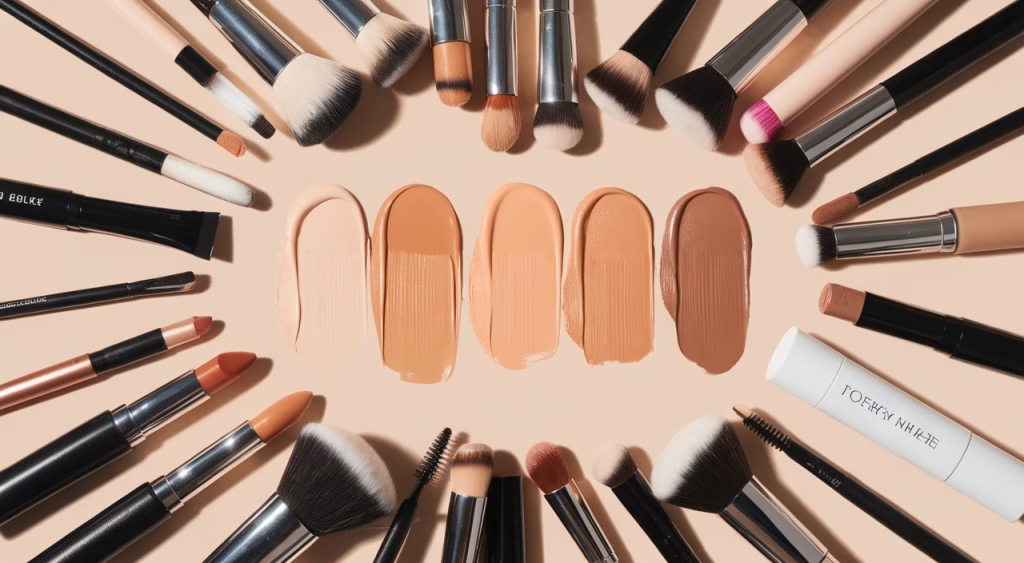
- Swatch Strategically: Resist the urge to swatch on your hand or forearm. The skin on your face, neck, and chest are the areas you want to match. Apply a small stripe of 2-3 potential shades along your jawline, extending slightly down your neck.
- Embrace Natural Light: Store lighting can be incredibly deceptive. Step outside or stand near a window to see how the foundation truly looks on your skin. What seems perfect under fluorescent lights might be too warm or cool in daylight.
- Allow for Oxidation: Give the foundation a few minutes to "settle" on your skin. Many formulas will oxidize, meaning they darken slightly once exposed to air and your skin’s oils. Test shades and wait 5-10 minutes before making a decision.
- Consider Your Skin’s Depth: Are you fair, light, medium, tan, dark, or deep? This is your skin’s surface color. Combine this with your undertone. For example, if you have fair skin with cool undertones, you’ll look for "fair, cool" shades. This is particularly important for finding the best foundation shade for fair skin, which can often look too pink or too yellow if the undertone isn’t considered.
- Seasonal Adjustments: In practice, you’ll notice your skin tone can change slightly with the seasons. You might need a slightly warmer or darker shade in the summer and a lighter one in the winter. Don’t be afraid to have two "perfect" shades or mix them for a custom match.
Section 3: Finding the Perfect Concealer Match
Concealer is your secret weapon for perfecting your complexion, but its application differs significantly from foundation. While foundation creates an even base, concealer targets specific areas of concern. The goal here is a precise concealer shade match to effectively neutralize discoloration or camouflage blemishes without drawing more attention to them.
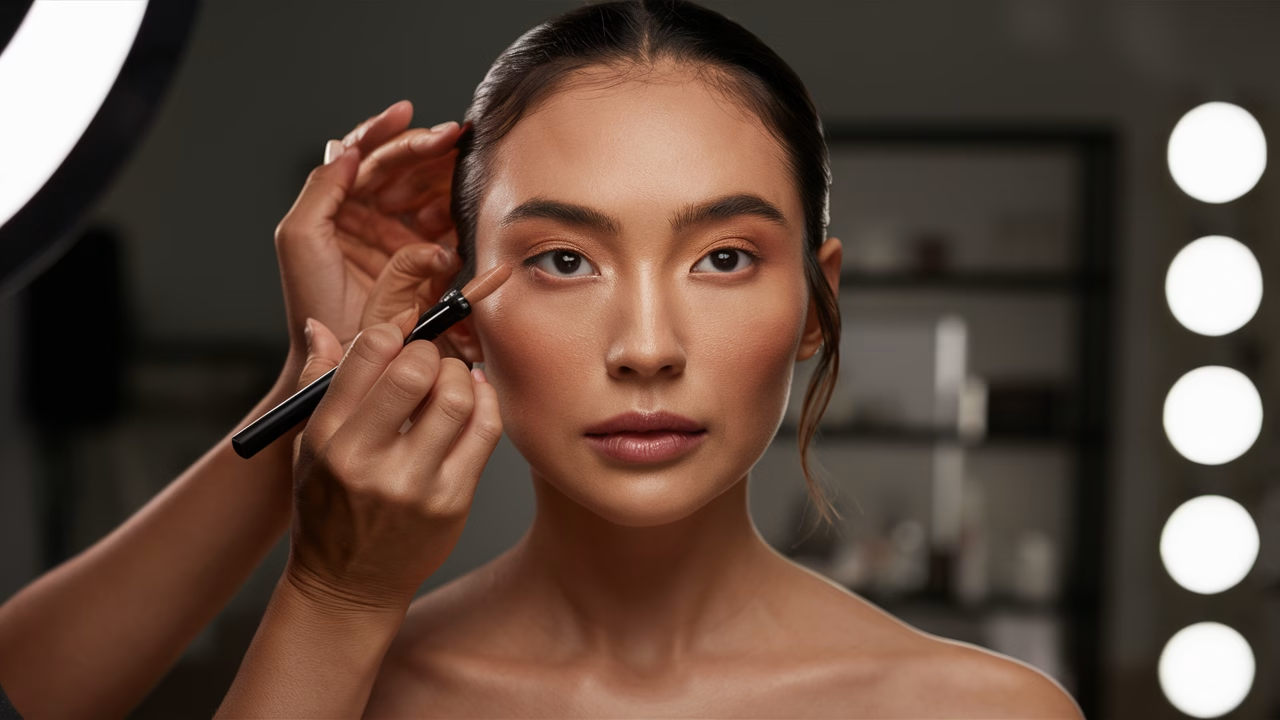
- For Dark Circles: This is where understanding color theory comes in handy. Dark circles often have blue or purple undertones. To neutralize these, you’ll want a concealer with peachy or orange undertones. Choose a shade that is one to two shades lighter than your foundation to brighten the area. Apply it in a "V" shape under your eyes and blend gently. This is how to choose concealer for dark circles like a pro.
- For Blemishes and Redness: For spots or areas of redness, you want a concealer that matches your foundation shade exactly. A lighter shade will only highlight the blemish. For redness, a green color corrector can be used sparingly underneath your foundation-matching concealer to neutralize the red. Apply directly to the blemish and tap to blend the edges, leaving the coverage concentrated on the spot.
- For Highlighting: If you’re using concealer for highlighting, choose a shade one to two shades lighter than your foundation with a subtle luminosity. Apply it to the high points of your face like the brow bone, bridge of the nose, and center of the forehead.
Remember, less is often more with concealer. Build up coverage slowly to avoid a cakey look.
Section 4: Makeup Techniques for Different Skin Tones
Beyond foundation and concealer, integrating other makeup elements seamlessly requires an understanding of how colors interact with your unique skin tone. It’s not just about what shade works, but how you use it to create balance and radiance. Choosing makeup for your complexion extends to every product in your kit, from blush to bronzer to eyeshadow.
Subsection: Enhancing Your Natural Beauty
Once you’ve perfected your base, consider these expert makeup tips for warm undertones, cool undertones, and neutral complexions to truly enhance your natural beauty:
- Warm Undertones: Embrace golden, peachy, and coral hues. For blush, think apricot or terracotta. Bronzers with a golden shimmer will enhance your natural warmth beautifully. Eyeshadows in earthy tones like browns, golds, olives, and warm plums will make your eyes pop.
- Cool Undertones: Lean into pinks, blues, and purples. Rosy or berry-toned blushes will complement your skin. When it comes to bronzer, opt for cooler, less orange-based shades. Eyeshadows in silver, grey, cool browns, blues, and purples will look stunning.
- Neutral Undertones: You have the best of both worlds! You can often wear a wider range of colors. Experiment with both warm and cool shades, and see what you gravitate towards. "True" nudes, soft peaches, and muted roses are often universally flattering.
- Lip Colors: Just like other makeup, consider your undertone. Warm undertones look great in orange-reds, corals, and peachy nudes. Cool undertones shine in blue-reds, fuchsias, and berry tones. Neutral undertones can pull off almost anything!
- Application is Key: Always blend, blend, blend! Harsh lines detract from a flawless finish, regardless of how perfectly matched your makeup for skin tone is. Use good quality brushes and sponges.
In practice, you’ll notice that these small adjustments make a dramatic difference in how polished and cohesive your overall look appears.
Conclusion: Embrace Your Unique Complexion
Finding the perfect makeup for skin tone is an art, but it’s an art that anyone can master with the right knowledge and tools. By understanding your undertone, becoming a savvy foundation shade finder, and mastering the concealer shade match, you’re not just applying makeup – you’re crafting a masterpiece that is uniquely you. What does this mean for you? It means newfound confidence, a radiant glow, and the satisfaction of knowing every product you use is enhancing your natural beauty. Embrace your complexion, experiment with confidence, and let your true self shine through.
Final Thoughts
The journey to finding your ideal makeup is personal and empowering. Remember that true beauty comes from within, but a perfectly matched makeup application can certainly boost your confidence. Trust your instincts, use these professional techniques, and never underestimate the power of a perfectly chosen shade. With these insights, you’re well on your way to a flawless and harmonious look, every single day.
FAQ
How do I know what makeup matches my skin tone?
To determine what makeup matches your skin tone, first identify your undertone (warm, cool, or neutral) using tests like examining your wrist veins or holding white paper next to your face. Then, swatch foundation shades on your jawline in natural light, allowing them to oxidize before choosing the one that disappears seamlessly into your skin.
Can my skin undertone change over time?
No, your skin’s undertone is determined by genetics and remains constant throughout your life. While your surface skin tone can change due to sun exposure or conditions, the underlying cool, warm, or neutral hue does not.
What should I do if I’m between two foundation shades?
If you find yourself between two foundation shades, consider purchasing both and mixing them to create a custom match. This is especially useful for seasonal changes when your skin tone might fluctuate slightly. Alternatively, some brands offer "adjuster" drops to lighten or darken a shade.
How do I choose a foundation for mature skin tones?
For mature skin, focus on foundations that offer hydration, a luminous finish, and are non-comedogenic. Avoid heavy, matte formulas that can settle into fine lines. Look for lightweight, liquid or serum foundations that provide a natural, radiant look and blend seamlessly with your undertone.
Is it necessary to use a primer before foundation?
While not strictly "necessary," using a primer can significantly improve the longevity and finish of your foundation. A good primer creates a smooth canvas, minimizes pores, and can help control oil or add hydration, leading to a more flawless and long-lasting makeup application.
Why does my foundation look orange or ashy?
If your foundation looks orange, it likely has too much warmth or is too dark for your skin’s depth and undertone. If it looks ashy or grey, it might be too cool for your warm undertone, or it could be too light. Always ensure you’ve correctly identified both your skin’s depth and undertone.